175. Classes: teachers lecture or students do some of the talking?
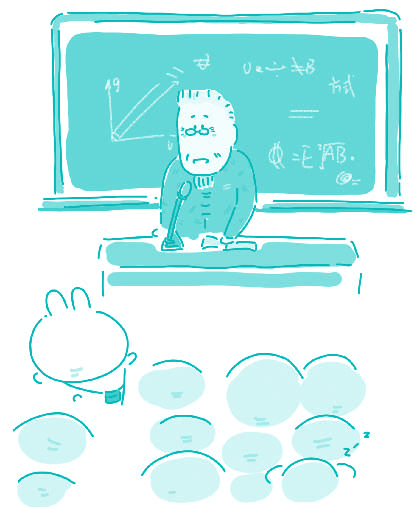
There are basically two types of classes in university, classes, i.e., where teachers lecture and where the students do some of the talking. Both teaching and learning approaches are valuable and have their own relative merits.
Classes that are dominated by teachers' lectures may benefits students in several ways. First of all, lectures can communicate the intrinsic interest of the subject matter. The speaker can convey personal enthusiasm in a way that no book or other media can. Enthusiasm stimulates interest, and it is an undeniable fact that interested, stimulated people tend to learn more. Moreover, lectures in university settings can provide students with role models of scholars in action. The professor's way of approaching knowledge can be demonstrated for students to emulate. Furthermore, lectures can organize material in a special way. They may provide a faster, simpler method of presenting information to an audience with its own special needs. Lectures are particularly useful for students who read poorly or who are unable to organize print material.
On the other hand, lecture approaches also have some relevant weaknesses. For example, the lecture often puts students in a passive rather than an active role. As is often the case, passivity can hinder learning. At the same time, most lectures assume that all students are learning at the same pace and at the same level of understanding, which is hardly ever true. Especially, Lectures place the burden of organizing and synthesizing content solely on the lecturer. They are not well suited to higher levels of learning such as application, analysis, and synthesis. Lectures require an effective speaker who can vary tone, pitch, and pace of delivery. Lecturers must be verbally fluent, a skill that is not stressed nor learned in many Ph.D. programs and is usually distributed unevenly among people. Lectures are therefore sometimes not well suited to complex, detailed, or abstract material.
In summary, Lecturing is probably the oldest teaching method and remains the most common form of instruction, despite the fact that some research has shown that lecturing is ineffective, especially if not combined with some alternative style of teaching. In fact, Lecturing is very appropriate for some goals and very inappropriate for others. And at the same time, the counterpart —the approach that allows students to participate discussions is equally non-universal. Therefore, I can hardly simply say that I prefer either approach. I think the choice should depend on circumstances including factors such as the subject that is to learn, the depth that needs to explore, the quality that the lecturer or the discussing group have.
译文
175. 课堂授课:全由老师讲授,还是学生参与部分讨论?
大学里主要有两种基本的授课方式:教师讲授和学生参与讨论。这两种教学方式都是很有价值的,并且各有长处。
以教师讲授为主的上课方式对学生有几个方面的好处。首先,演讲的形式可以传达出所涉及主题的内在的乐趣。演讲者能够激发出听众的热情,而这是书本和其他媒体所做不到的。热情又能进一步激发兴趣。不能否认,人在有兴趣又有热情的时候最能学到东西。此外,大学里进行演讲的形式可以给学生们树立一个如何做好一名学者的榜样。教授是如何传授知识的,学生们便能以此为范例进行效仿。说得更远一些,演讲的形式有其特殊的组织材料的方式。它能根据听众的自身需要更快速、更简洁地向他们提供和呈现信息。对阅读能力较差和不善于组织印刷品的学生而言,演讲的形式就更显出其优越性。
另一方面,演讲的形式也有其相对的不足之处。比如,学生在其中扮演相对被动的而不是积极的角色。而通常来说被动的状态对学习知识是不利的。而且,大多数讲座都是以学生们具有同样的学习进度和同等的理解水平为前提的,而事实却从来都并非如此。尤其是,演讲的形式把组织和综合讲课内容的任务都交给了讲课者。而对于那些较高程度的学习,例如应用、分析或者综合能力,也是不太适合的。演讲必须有一个好的演讲者,能够随时变换语调、讨论的对象和讲授的进度。演讲者必须要口齿流利,这样的技能在博士生的教学中不被重视也不教授,而每个人在这方面也是天生有长有短。因此,演讲有时并不很适合那些复杂的、详细的或者抽象的内容。
总之,演讲大概是最古老的教学方式,并且一直是最常运用的教学方式,尽管研究事实表明演讲的方式效率不高,特别是当其没有别的教学方式相配合的时候。实际上,演讲的方式非常适合一些目标,而要达到另一些目的,演讲就不适合了。相应的,让学生参与讨论的方式也并非处处适用。因此,我很难说我更喜欢哪种方式。我认为应该根据不同情况做出不同选择,要考虑各种各样的因素,比如学习主题、探讨深度以及讲师或讨论者的水平等等。
Word List
- approach [əˈprəutʃ] n. 方法
- passive [ˈpæsiv] adj. 被动的
- merit [ˈmerit] n. 优点
- hinder [ˈhində] v. 干扰
- intrinsic [inˈtrinzik] adj. 内在的
- synthesize [ˈsinθiˌsaiz] v. 综合
- convey [kənˈvei] v. 传达
- be suited to 适合于
- enthusiasm [enˈθu:ziæzəm] n. 热情
- application [ˌæpliˈkeiʃən] n. 应用
- stimulate [ˈstimjəˌleit] v. 激发
- analysis [əˈnælisis] n. 分析
- undeniable [ˌʌndiˈnaiəbəl] adj. 不可否认的
- alternative [ɔ:lˈtə:nətiv] n. 选择
- appropriate [əˈprəuprieit] adj. 适当的
- emulate [ˈemjəˌleit] v. 仿效
- counterpart [ˈkauntəˌpa:t] n. 对应
- audience [ˈɔ:diəns] n. 听众
- participate [pa:ˈtisəˌpeit] v. 参与
- relevant [ˈreləvənt] adj. 有关的
- explore [iksˈplɔ:] v. 探究